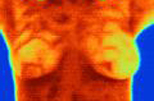


TAS Breast Thermogram Interpretation - The Gold Standard for Accuracy and Credibility
NEW! READ ABOUT OUR EXCITING AWARD-WINNING TECHNOLOGY — SPATIAL THERMAL IMAGING
Thermogram Assessment Services is driven by:
- The desire to improve breast cancer survival rates through early detection using thermography
- First-hand knowledge of the efficacy of properly performed breast thermography examinations
- Recognition of the necessity to assure examinations are performed and analyzed correctly
The effectiveness of the computerized breast thermography (CBT) examination advanced by TAS is cited often for increasing breast cancer survival rate by 61%.
From experience, TAS believes long-term breast cancer survival rates will be favorably impacted with widespread breast thermography screenings – but, only if the examinations and image interpretation are performed correctly. These essential conditions are often overlooked, or worse, ignored.
Breast thermograms must be recorded according to strict patient preparation and examination criteria using accurate image capturing technology and techniques, and interpreted using a recognized standard, objective and accurate procedure. TAS provides these elements, which are essential to the credible practice of breast thermography.
Breast Thermogram Interpretation Services TAS breast thermogram interpretation conforms to international standards and embodies a clinical study of more than 110,000 patients. It delivers the most accurate, objective and credible breast thermogram interpretations available. Using the TAS service is easy and economical – submit examinations with a mouse click, and receive the results by email. Read more »
TAS (CBT) Examination Protocol The CBT examination protocol was embraced by the thermology community when first introduced by TAS's founder in 1982, and its underlying principals and methods continue in widespread use today. Read more »
Disclaimer: TAS embraces thermal imaging as an efficacious diagnostic tool and prognosticator of functional disorder; however, TAS also recognizes and cautions others that medical thermography is an adjunct to other diagnostic methods, and not a sole screening or standalone diagnostic modality.